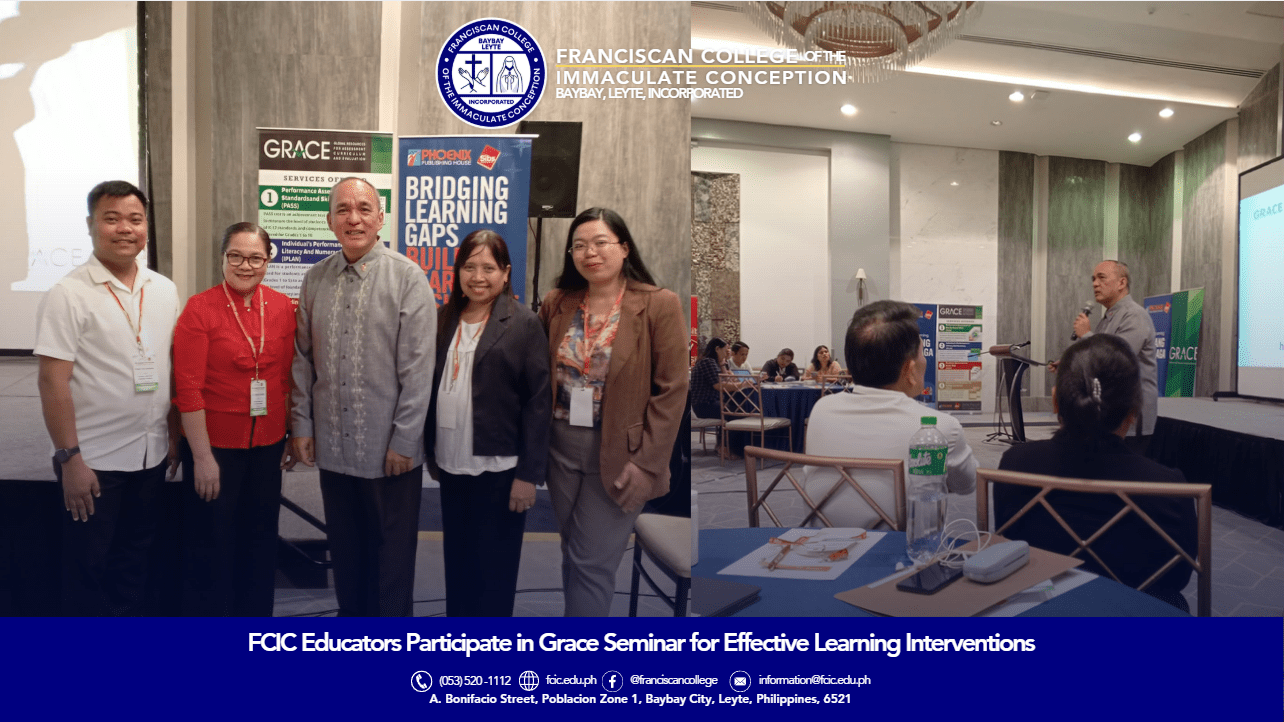
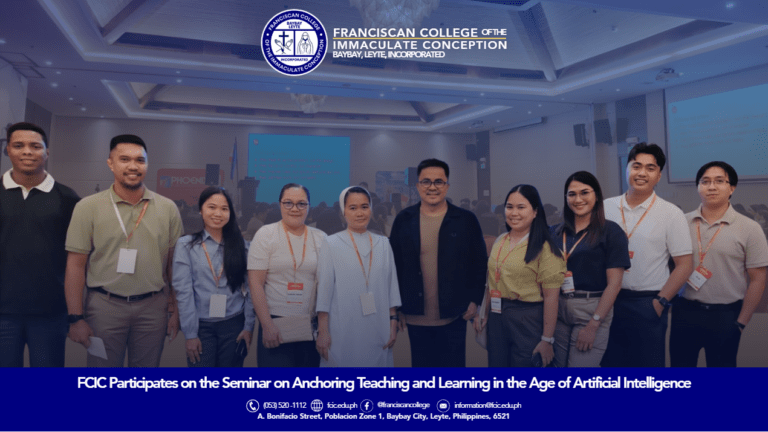
On Thursday, 30 January 2025, from 3:00 PM to 5:00 PM, together with fellow teachers and our school principal, we attended a seminar hosted by Phoenix Publishing House and Sibs, entitled “Anchoring Teaching and Learning in the Age of AI.” The session, delivered by Dr. Reuben Velarde Jr., offered a deeply philosophical and practical exploration of how Artificial Intelligence can be integrated into education without compromising the integrity of learning.
Dr. Velarde opened with a statement that immediately set the tone for the seminar: “AI doesn’t corrupt learning. It reflects it.” This assertion underscores that AI, in itself, is neutral; it magnifies the learning culture already in place. When educational tasks require judgment, reflection, and accountability, AI can serve as a valuable partner. Yet, when tasks demand only output, students risk becoming passive participants, submitting polished work without a true understanding of the material. The real danger emerges when AI begins to do the thinking for the learner, leading to what Dr. Velarde describes as “learning erosion”, where confidence supplants comprehension, errors go unnoticed, and performance is mistaken for mastery.
Central to the seminar was the enduring value of textbooks as anchors in a generative AI landscape. Far from obsolete, textbooks provide coherence, maintain sequence, structure thinking, and act as ethical guardrails that define what knowledge is worth pursuing. Anchoring learning in textbooks ensures that students engage deeply with ideas, develop independent judgment, and retain accountability for their intellectual work.
To operationalize this approach, Dr. Velarde presented the “Concrete Blending” framework. Students first anchor their learning in the textbook, then use AI to amplify understanding, verify outputs against authoritative sources, and finally transform knowledge through application, argumentation, or creation. This framework positions AI as a collaborative partner rather than a replacement for human thought, preserving the intellectual labor essential to mastery.
The seminar also emphasized eight guiding ethical principles that must inform AI integration in education, serving as both moral and pedagogical compasses. These principles highlight the importance of: prioritizing values over systems, valuing process over results, and fostering independent thinking over blind compliance. They stress that students must have ownership of their ideas, engage in real rather than simulated experiences, and maintain transparency about AI’s role. Assessment should be used as a compass for growth, not merely a ranking tool, and every interaction with AI must be intentional, serving a clear pedagogical purpose. Collectively, these principles ensure that AI enhances learning rather than undermining it.
Across disciplines, the seminar highlighted practical applications. In English, AI can help identify rhetorical moves, which students then analyze and justify in their own revisions. In science, AI-generated practice questions can be annotated and expanded upon, fostering critical engagement. In social studies, AI can offer multiple interpretations of data or events, prompting students to defend positions using evidence. In all cases, textbooks remain the anchor, and AI serves to amplify understanding rather than replace it.
Reflecting on the seminar, it is evident that the challenge for educators in the AI era is not to resist technology but to cultivate environments where it enriches rather than diminishes intellectual rigor. Anchored in textbooks, guided by ethical principles, and employed with intentionality, AI has the potential to deepen learning while preserving its foundational purpose.
As Dr. Velarde aptly stated, “Curation is a moral act.” In an age of boundless generative AI content, anchoring knowledge remains both an ethical and pedagogical imperative